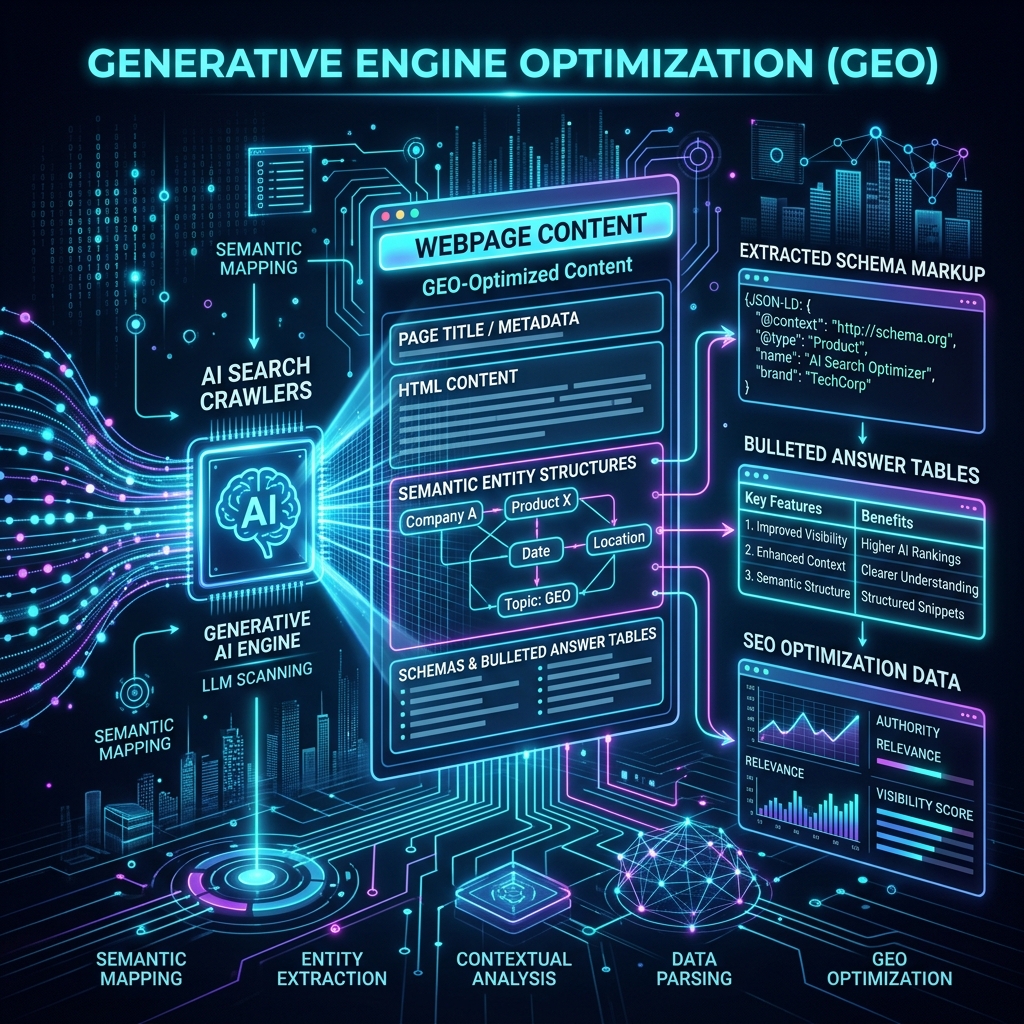
As AI-powered search engines rise, businesses must adapt content optimization. Let's explore Generative Engine Optimization (GEO), semantic indexing, and structured data layouts.
Search is changing. Instead of simply listing links, search tools (such as Google Overviews, Perplexity, and OpenAI Search) summarize web page content to answer user questions directly. Generative Engine Optimization (GEO) focuses on structuring your content so LLM crawlers can read and cite it easily. Let's look at the primary optimization strategies.
1. Structuring Content for LLM Parsing
AI search crawlers parse web content to extract key facts and answer queries. To make your content easy to parse:
- Clear Summaries: Begin pages or articles with a direct summary of key facts.
- Bulleted Data Tables: Present comparisons and statistics in clear tables or bulleted lists.
- Descriptive Subheadings: Use hierarchical subheadings (H2, H3) that match user search intent.
2. Enforcing Semantic Schemas & JSON-LD
Semantic markup helps AI engines understand the entities and relationships on your page. Injecting structured schemas using JSON-LD script blocks provides clear context about your business, products, or articles, helping search tools reference your page as an authoritative source.
3. Improving Cite Authority
Generative search engines value authoritative references. To build page authority:
- Include data points and statistics from verified, authoritative sources.
- Link to reputable external studies and official documentation.
- Ensure your content covers topics in depth, demonstrating clear expertise (EEAT).
4. Optimizing for Conversational Queries
Users query AI search engines using natural, conversational phrases rather than simple keywords. Optimize your content by including explicit Q&A sections that address common user questions directly, making it easier for generative models to cite your answers.