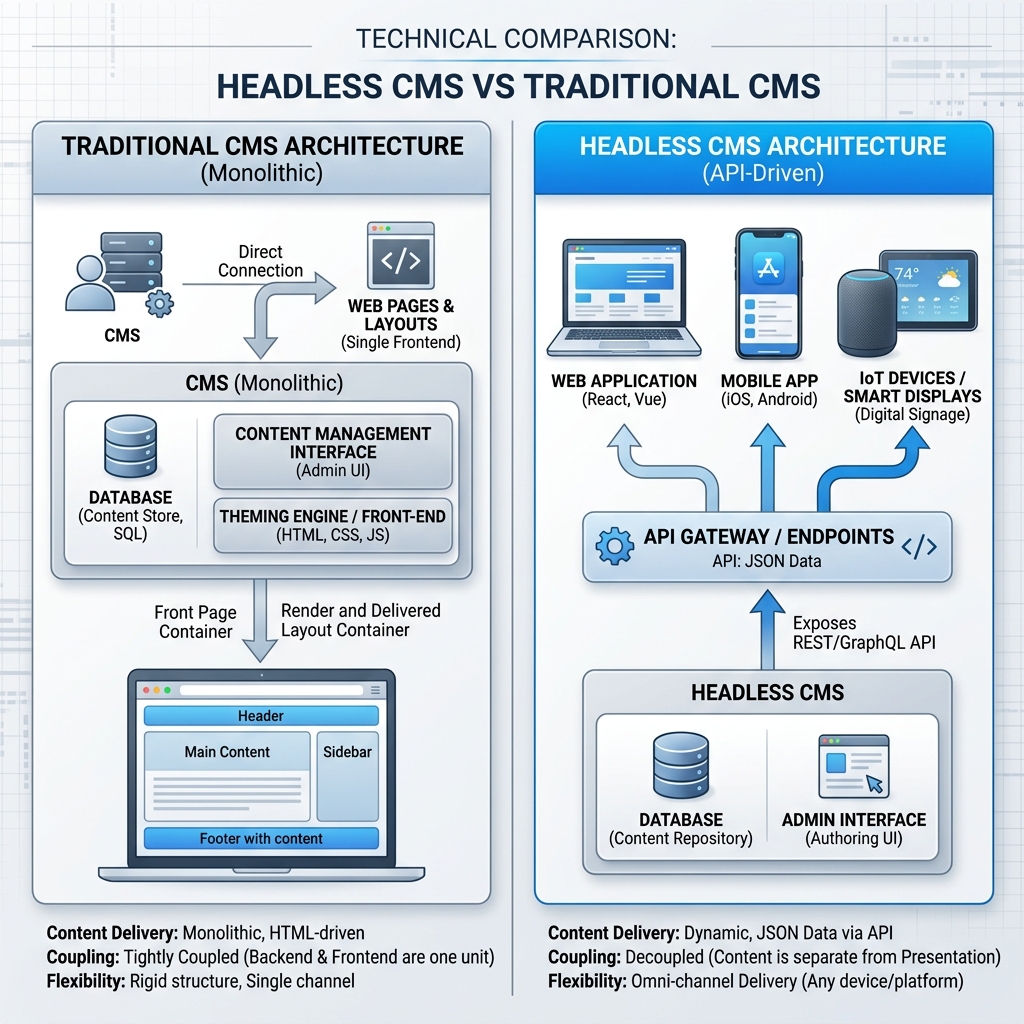
Choosing between monolithic content systems and API-first setups impacts web performance. Let's compare headless CMS architectures with traditional platforms.
For modern web applications, page loading speed and content flexibility are critical. Traditional coupled platforms (like WordPress) manage content editing and front-end rendering in the same system, often introducing database query delays. Headless content management systems (CMS) decouple these layers completely. Let's look at their differences.
1. Traditional CMS: Monolithic Coupled Layouts
A traditional CMS links the content database directly to the front-end layout:
- Tightly Coupled: The backend authoring interface and front-end templates run on the same server engine.
- Template Bloat: Customizing layouts often requires large plugins, which add unnecessary code and slow down load speeds.
- Single-Channel Delivery: Content is designed specifically for web pages, making it difficult to share data with mobile or smart devices.
2. Headless CMS: API-Driven Data
A headless CMS manages content authoring and exposes data through secure REST or GraphQL APIs:
- Decoupled Front-end: Content is pulled dynamically via API by fast, pre-rendered frontend frameworks (like Nuxt).
- Omnichannel Delivery: Content is stored as raw JSON, allowing you to share it across web, mobile, and IoT devices.
- Improved Security: Separating the content database from the public frontend reduces vulnerability to SQL injection and backend attacks.
3. Performance and Load Speeds
Because headless systems decouple content from presentation, you can pre-render web pages statically. This static site generation (SSG) delivers pages instantly from global CDNs, helping you hit Core Web Vitals targets easily. Monolithic systems must query databases on every request, increasing page loading times.
4. How to Choose
Choose a traditional CMS for simple, standalone websites where editors need to manage themes and templates visually without developer support. Choose a headless CMS for custom applications, omnichannel platforms, or when page load speed and security are critical project requirements.