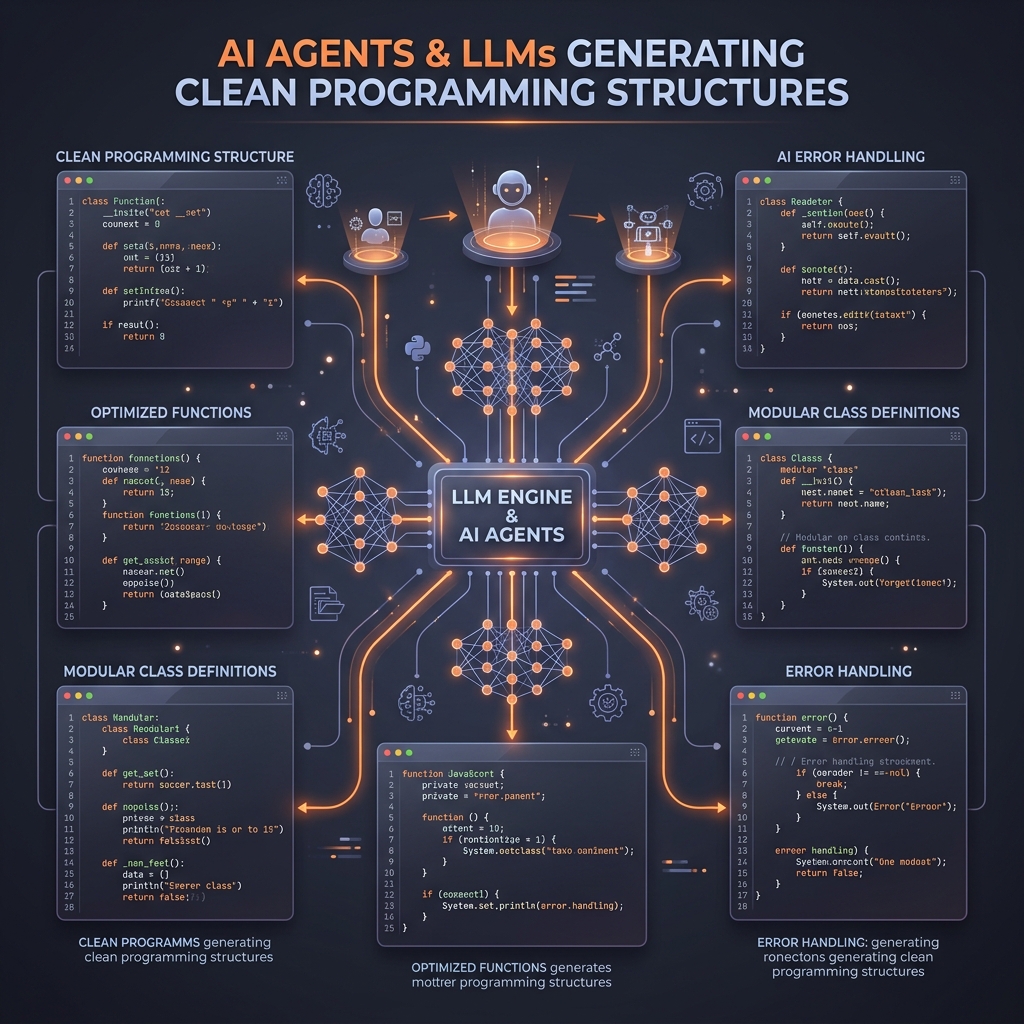
Artificial Intelligence is changing custom software development, shifting workflows from simple code completion to autonomous agent systems. Let's analyze how AI is changing coding velocity, quality assurance, and system design.
The integration of Large Language Models (LLMs) into the software development lifecycle goes beyond simple auto-complete suggestions. Modern engineering teams leverage autonomous AI agents and automated testing loops to design, verify, and scale software systems with high precision.
1. The Rise of Agentic Engineering
Traditional developer tools acted as static references. Agentic workflows, however, use autonomous loops to execute complex development tasks:
- Task Decomposition: Agents analyze high-level features and break them down into specific database schemas, routing files, and component views automatically.
- Autonomous Debugging: Runtimes run automated checks, capture error codes, and rewrite code files autonomously to fix bugs before human review.
- API Integration: Agents scan official documentation to generate and test custom API connections on the fly.
2. Automated Quality Assurance & Testing
Writing test suites is traditionally a time-consuming development task. Modern AI systems parse code files to write unit, integration, and end-to-end tests automatically. This guarantees high test coverage, identifies boundary errors, and prevents bugs from reaching production code.
3. Impact on Legacy Modernization
Modernizing outdated legacy codebases (such as converting Cobol or legacy PHP code to modern frameworks) is highly complex. AI tools can analyze legacy files, map database dependencies, and generate equivalent, optimized code in modern frameworks (like Laravel or Nuxt) while preserving business logic.
4. The Evolution of the Developer Role
As AI automates repetitive coding tasks, the developer role is evolving. Engineers focus less on writing boilerplate code and more on defining system architecture, validating security protocols, and managing data flows. This shift helps teams deliver complex custom software platforms in weeks instead of months.