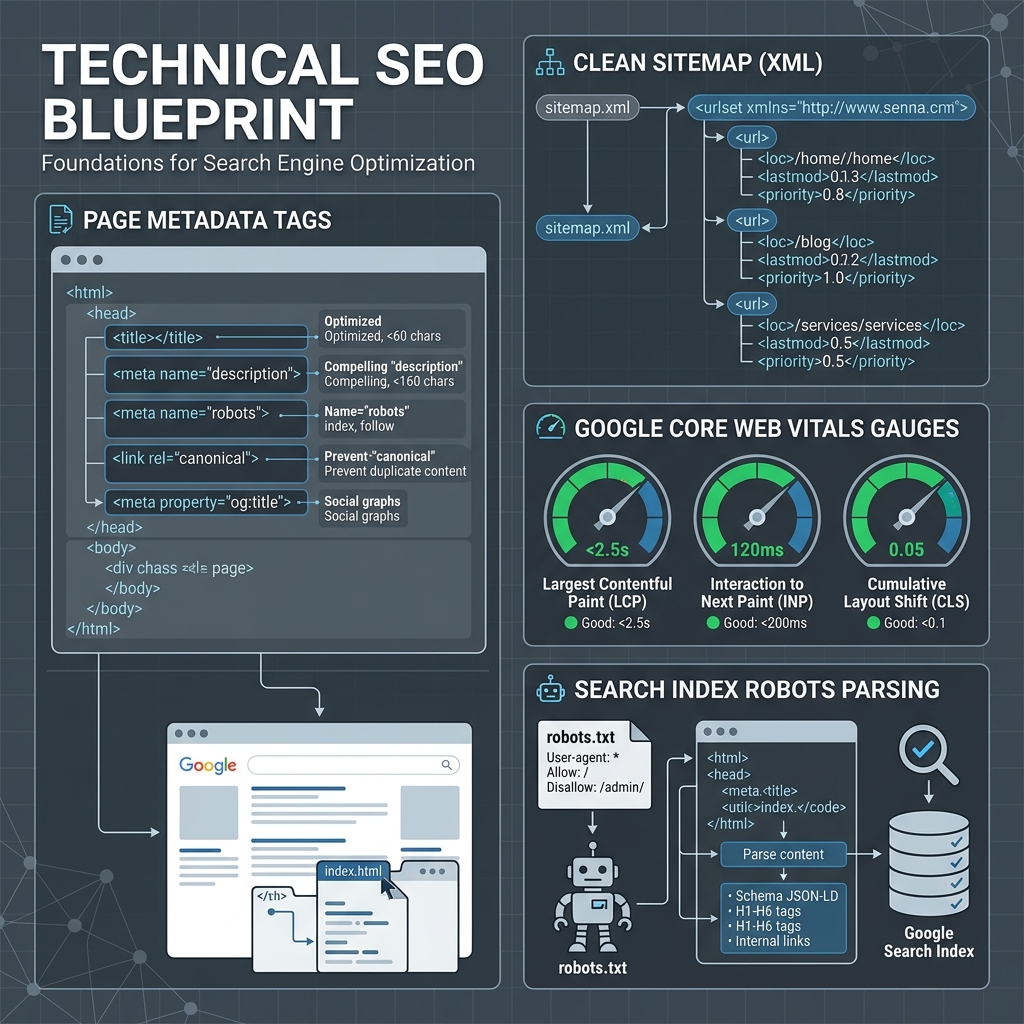
Enforcing search visibility requires looking beyond content keywords. Optimizing rendering methods, improving Core Web Vitals, structuring microdata, and implementing canonical rules are key.
Search engine algorithms prioritize technical performance when ranking web applications. If your page layout shifts during rendering or takes seconds to load on mobile devices, search ranking declines. Let's look at the primary technical parameters required to optimize modern websites for search indexation.
1. Server-Side Rendering vs. Client-Side Rendering
Client-Side Rendered (CSR) applications require browsers to run JavaScript bundles before displaying content. Search engine crawlers (such as Googlebot) can struggle to parse these dynamic client-side layouts, leading to incomplete indexing.
In contrast, Server-Side Rendering (SSR) delivers fully pre-rendered HTML layouts to the browser on the initial request. This guarantees that search engine bots can scan your headings, copy, and link structures instantly.
2. Core Web Vitals Optimization
Core Web Vitals are key metrics that Google uses to evaluate user experience:
- Largest Contentful Paint (LCP): Tracks loading speed. For optimal rankings, ensure the largest visible element loads within 2.5 seconds by optimizing images and using preloading rules.
- Cumulative Layout Shift (CLS): Tracks visual stability. To prevent layout shifts, declare explicit width and height dimensions on all images and containers.
- Interaction to Next Paint (INP): Tracks page responsiveness. Ensure clicks and taps register within 200 milliseconds by optimizing event handling scripts.
3. Implementing Semantic Markup & JSON-LD
Using semantic HTML elements (like <article>, <header>, and <nav>) helps crawler bots understand page layouts.
Additionally, injecting structured data schemas using JSON-LD script blocks provides search engines with explicit information about your pages (such as article metadata, FAQs, and product details), helping you win rich snippets in search results.
4. Robots.txt, Sitemaps & Canonical Tags
Ensure search engine bots crawl your site efficiently by managing these settings:
- Register canonical links on all pages to prevent duplicate content flags caused by query parameters.
- Configure dynamic sitemap generation pipelines to notify search engines about new content instantly.
- Implement strict
robots.txtrouting parameters to prevent crawlers from indexing administrative or duplicate routes.